In today’s data-driven economy, executives are expected to make critical decisions faster than ever before. Whether leading a startup, managing a multinational corporation, or overseeing a growing enterprise, access to accurate and real-time business information has become essential.
This is where business intelligence dashboards for executives play a crucial role.
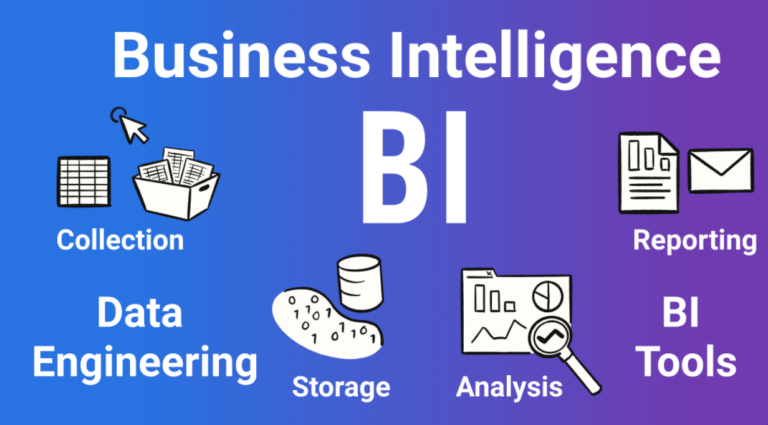
Modern business intelligence (BI) dashboards transform raw business data into actionable insights. Instead of relying on lengthy reports, spreadsheets, and manual analysis, executives can instantly monitor performance indicators, identify opportunities, detect risks, and make informed strategic decisions from a single interface.
Organizations that effectively implement executive dashboards often experience improved operational efficiency, better forecasting accuracy, enhanced collaboration, and stronger competitive advantages.
This comprehensive guide explores everything executives need to know about business intelligence dashboards, including benefits, features, implementation strategies, pricing considerations, and future trends.
What Are Business Intelligence Dashboards for Executives?
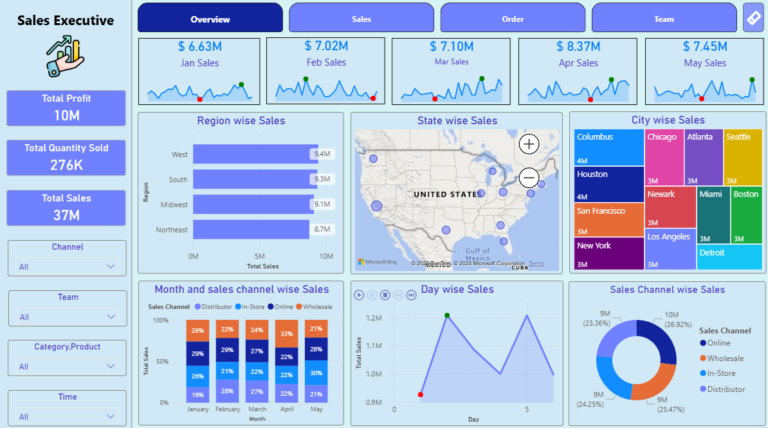
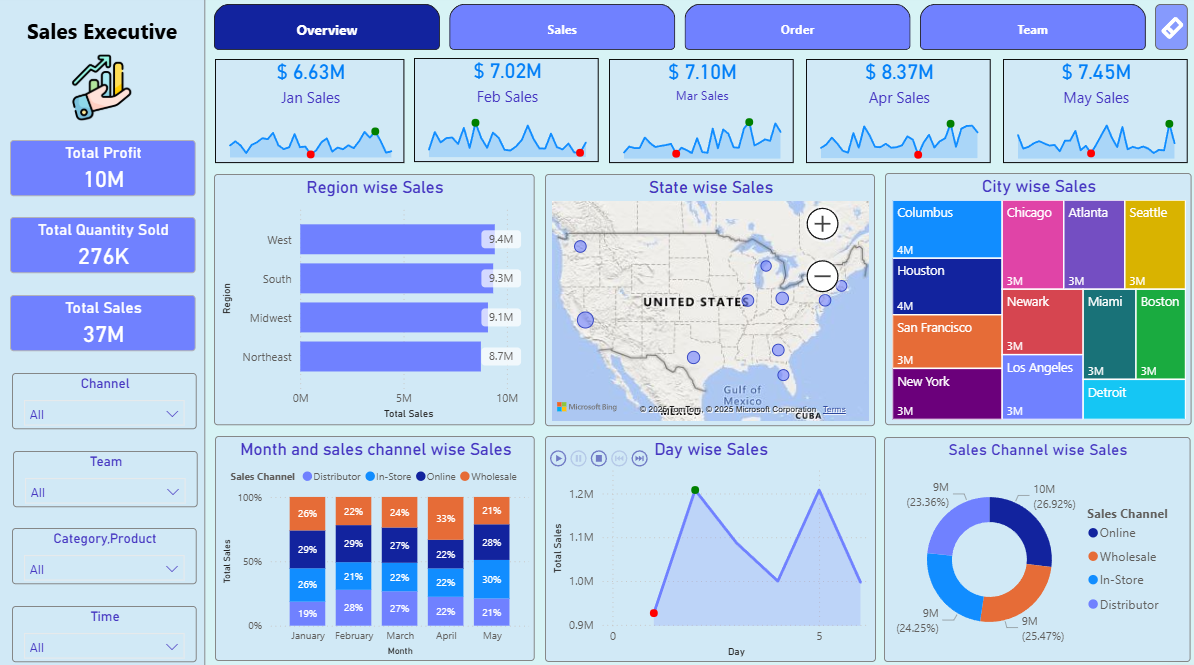
Business intelligence dashboards are visual platforms that consolidate organizational data from multiple sources into easy-to-understand charts, graphs, KPIs, and reports.
Executive dashboards are specifically designed for senior leadership teams such as:
- CEOs
- CFOs
- COOs
- CMOs
- CIOs
- Directors
- Business Owners
- Board Members
These dashboards provide a high-level overview of business performance while allowing users to drill down into specific departments, projects, or metrics when needed.
Rather than analyzing thousands of rows in spreadsheets, executives can immediately view:
- Revenue performance
- Profit margins
- Customer acquisition costs
- Marketing ROI
- Employee productivity
- Sales pipeline health
- Cash flow
- Operational efficiency
- Forecasting models
Why Executives Need BI Dashboards
The Problem with Traditional Reporting
Many organizations still rely on:
- Weekly reports
- Email updates
- Static spreadsheets
- Departmental presentations
These methods create several challenges:
Delayed Decision-Making
Data often arrives days or weeks after events occur.
Data Silos
Departments maintain separate reporting systems.
Human Error
Manual data entry increases inaccuracies.
Lack of Visibility
Executives struggle to identify company-wide trends.
Time Waste
Leaders spend hours compiling reports rather than making strategic decisions.
How Executive Dashboards Solve These Problems
Business intelligence dashboards provide:
Real-Time Monitoring
Executives can instantly access current business performance.
Centralized Data
Information from CRM, ERP, accounting, marketing, and HR systems is consolidated.
Visual Insights
Complex datasets become understandable through charts and visualizations.
Faster Decisions
Leadership teams can respond quickly to changing market conditions.
Predictive Analytics
Future trends can be forecasted using historical data patterns.
Key Features of Executive BI Dashboards
1. KPI Tracking
Key Performance Indicators (KPIs) allow executives to monitor organizational success.
Common executive KPIs include:
- Revenue growth
- Gross profit
- Net profit margin
- Customer lifetime value
- Customer retention rate
- Operating expenses
- Employee turnover
- Market share
2. Real-Time Data Updates
Modern dashboards update automatically as new information enters business systems.
Benefits include:
- Immediate awareness
- Faster reactions
- Improved accuracy
- Reduced reporting delays
3. Interactive Visualizations
Executives can explore data through:
- Line charts
- Pie charts
- Heat maps
- Bar graphs
- Scatter plots
- Geographic maps
Interactive dashboards make analysis easier than static reports.
4. Predictive Analytics
Advanced BI solutions use AI and machine learning to predict:
- Future sales
- Customer behavior
- Inventory requirements
- Financial performance
- Market trends
Predictive analytics helps leaders prepare before problems occur.
5. Mobile Accessibility
Modern executives frequently work remotely.
Mobile dashboards allow access via:
- Smartphones
- Tablets
- Laptops
Decision-makers can stay informed from anywhere.
6. Automated Reporting
Dashboards automatically generate:
- Daily reports
- Weekly summaries
- Monthly performance reviews
- Quarterly board reports
This significantly reduces administrative workload.
Types of Executive Dashboards
Strategic Dashboards
Designed for long-term planning.
Focus areas:
- Revenue growth
- Market expansion
- Competitive positioning
- Corporate objectives
Operational Dashboards
Track day-to-day activities.
Metrics include:
- Productivity
- Customer support
- Manufacturing output
- Logistics performance
Financial Dashboards
Used primarily by CFOs and finance teams.
Common indicators:
- Cash flow
- Profitability
- Expenses
- Forecasting
- Budget tracking
Sales Dashboards
Monitor:
- Lead generation
- Conversion rates
- Revenue
- Pipeline performance
Marketing Dashboards
Measure:
- Advertising ROI
- Website traffic
- Lead quality
- Campaign effectiveness
Benefits of Business Intelligence Dashboards for Executives
Improved Decision-Making
Access to accurate data enables evidence-based decisions.
Instead of relying on intuition, executives use measurable insights.
Enhanced Productivity
Automated reporting saves hours of manual work.
Leadership teams can focus on growth initiatives.
Better Financial Visibility
Financial dashboards reveal:
- Revenue trends
- Expense patterns
- Profitability metrics
This supports stronger budgeting and forecasting.
Increased Accountability
Departments become more accountable when KPIs are visible across the organization.
Transparency improves performance.
Competitive Advantage
Organizations that use real-time analytics often outperform competitors relying on outdated reports.

Essential Metrics Every Executive Dashboard Should Include
Financial Metrics
- Revenue
- EBITDA
- Net income
- Cash flow
- Gross margin
Customer Metrics
- Customer acquisition cost
- Lifetime value
- Churn rate
- Retention rate
Sales Metrics
- Pipeline value
- Conversion rates
- Average deal size
- Sales cycle length
Marketing Metrics
- Cost per lead
- Cost per acquisition
- Website conversions
- Campaign ROI
Operational Metrics
- Productivity rates
- Delivery performance
- Inventory turnover
- Service quality
AI-Powered Executive Dashboards

Artificial intelligence is transforming business intelligence.
Modern BI platforms now offer:
Automated Insights
AI identifies important trends automatically.
Anomaly Detection
The system alerts executives when unusual activity occurs.
Natural Language Queries
Executives can ask questions in plain English.
Example:
“Why did sales decline last month?”
The dashboard generates answers instantly.
Predictive Forecasting
AI predicts future outcomes with increasing accuracy.
Common Challenges During Dashboard Implementation
Poor Data Quality
Incomplete or inaccurate data creates misleading insights.
Solution
Establish strong data governance practices.
Too Many Metrics
Excessive information overwhelms executives.
Solution
Focus on critical KPIs.
Low User Adoption
Employees may resist new systems.
Solution
Provide training and executive sponsorship.
Integration Issues
Data often resides in multiple systems.
Solution
Choose BI tools with strong integration capabilities.
Best Practices for Executive Dashboard Design
Keep It Simple
Avoid cluttered interfaces.
Executives should understand dashboard information within seconds.
Prioritize Critical KPIs
Display the most important metrics first.
Use Consistent Visuals
Standardized charts improve usability.
Enable Drill-Down Analysis
Allow users to investigate underlying causes.
Ensure Mobile Responsiveness
Executives increasingly access dashboards from mobile devices.
Future Trends in Executive Business Intelligence
Generative AI Analytics
AI assistants will automatically explain business performance.
Voice-Based Dashboards
Executives will interact using voice commands.
Real-Time Predictive Models
Forecasts will continuously update based on incoming data.
Embedded Analytics
Analytics will appear directly inside operational software.
Self-Service Business Intelligence
Executives will access advanced insights without relying on analysts.
Cost of Business Intelligence Dashboard Solutions
Pricing varies significantly based on organizational requirements.
| Solution Type | Typical Cost |
|---|---|
| Small Business BI | $20–$100/User/Month |
| Mid-Market BI | $100–$500/User/Month |
| Enterprise BI | $10,000–$500,000+ Annually |
| Custom Dashboard Development | $5,000–$100,000+ |
Factors affecting cost:
- Number of users
- Data volume
- AI features
- Integrations
- Security requirements
- Customization needs
How to Choose the Right Executive Dashboard Platform
Consider the following criteria:
Ease of Use
Executives need intuitive interfaces.
Scalability
The platform should grow with the organization.
Security
Protect sensitive business information.
Integration Capabilities
Connect with existing software systems.
AI Features
Predictive analytics provides long-term value.
Vendor Support
Reliable technical support is essential.
Frequently Asked Questions
What is an executive dashboard?
An executive dashboard is a visual reporting platform that provides leadership teams with real-time insights into business performance.
Why are business intelligence dashboards important?
They enable faster decision-making, improve visibility, and reduce manual reporting efforts.
Can small businesses use BI dashboards?
Yes. Many affordable solutions are available for startups and small businesses.
Are AI-powered dashboards worth it?
For most organizations, AI significantly improves forecasting, anomaly detection, and strategic planning.
How long does implementation take?
Depending on complexity, implementation may take anywhere from a few weeks to several months.
Conclusion
The importance of business intelligence dashboards for executives continues to grow as organizations generate larger volumes of data and face increasingly complex decisions. Executive dashboards provide a centralized view of critical business metrics, helping leaders improve performance, reduce risks, identify opportunities, and maintain competitive advantages.
Companies that invest in modern BI technologies, AI-powered analytics, and real-time reporting capabilities position themselves for stronger growth, better operational efficiency, and smarter strategic decision-making.
Whether you are a CEO, CFO, COO, or business owner, implementing an executive dashboard may be one of the most valuable investments your organization makes in the coming years.